
Introduction
A cluttered room can quietly drain your energy. Piles of jackets on chairs, shirts stacked over drawers, and seasonal outfits squeezed into overstuffed closets make even the most beautiful home feel chaotic. A simple clothing rack can instantly change that dynamic.
Whether you’re organizing a small apartment, styling a boutique display, or creating a capsule wardrobe setup, the right clothing rack offers flexibility, visibility, and effortless access. It’s more than just a storage tool—it’s a design statement and a practical solution rolled into one.
In this comprehensive guide, you’ll discover everything you need to know before choosing, styling, and maintaining a rack that truly fits your space and lifestyle.
What Is a Clothing Rack?
A clothing rack is a freestanding or wall-mounted structure designed to hang garments for storage, display, or drying. Unlike built-in wardrobes, it offers mobility, open visibility, and adaptable placement.
After years of being seen as a temporary solution, modern racks have evolved into stylish, multifunctional pieces used in:
- Bedrooms
- Walk-in closets
- Entryways
- Laundry rooms
- Retail boutiques
- Fashion studios
They blend storage and decor seamlessly, especially in minimalist and contemporary interiors.
After understanding its purpose, the next step is choosing the right type.
Types of Clothing Rack Designs
The design you select should match both your functional needs and your aesthetic preferences.
Freestanding Clothing Rack
Freestanding models are the most popular. They’re easy to assemble, move, and reposition.


These racks often feature:
- Single or double hanging bars
- Bottom shelves for shoes or boxes
- Open frame designs
They work especially well in small apartments or studio layouts where built-in closets are limited.
Rolling Clothing Rack
If mobility matters, a rolling option is ideal. It includes wheels, often with locking mechanisms, making it perfect for:
- Retail stores
- Photoshoots
- Seasonal wardrobe rotation
- Laundry organization
Wall-Mounted Clothing Rack
Wall-mounted racks save floor space and create a floating effect. They’re excellent for narrow rooms and entryways.
Double-Bar Clothing Rack
Need more hanging space? A double-bar rack doubles capacity without increasing footprint significantly. It’s ideal for separating:
- Shirts and pants
- Workwear and casual outfits
- Seasonal collections
How to Choose the Right Clothing Rack
Choosing the right piece isn’t just about appearance. Several practical factors come into play.
1. Size and Dimensions
Measure your available space carefully. Consider:
- Ceiling height
- Floor width
- Clearance for doors and drawers
- Distance from walls
A rack that’s too tall may overwhelm a room, while one that’s too short limits hanging options.
2. Weight Capacity
Heavy winter coats demand sturdy construction. Look for:
- Reinforced joints
- Thick metal tubing
- Solid wood frames
Flimsy structures can bend or collapse under weight.
3. Material Options
Different materials offer different benefits:
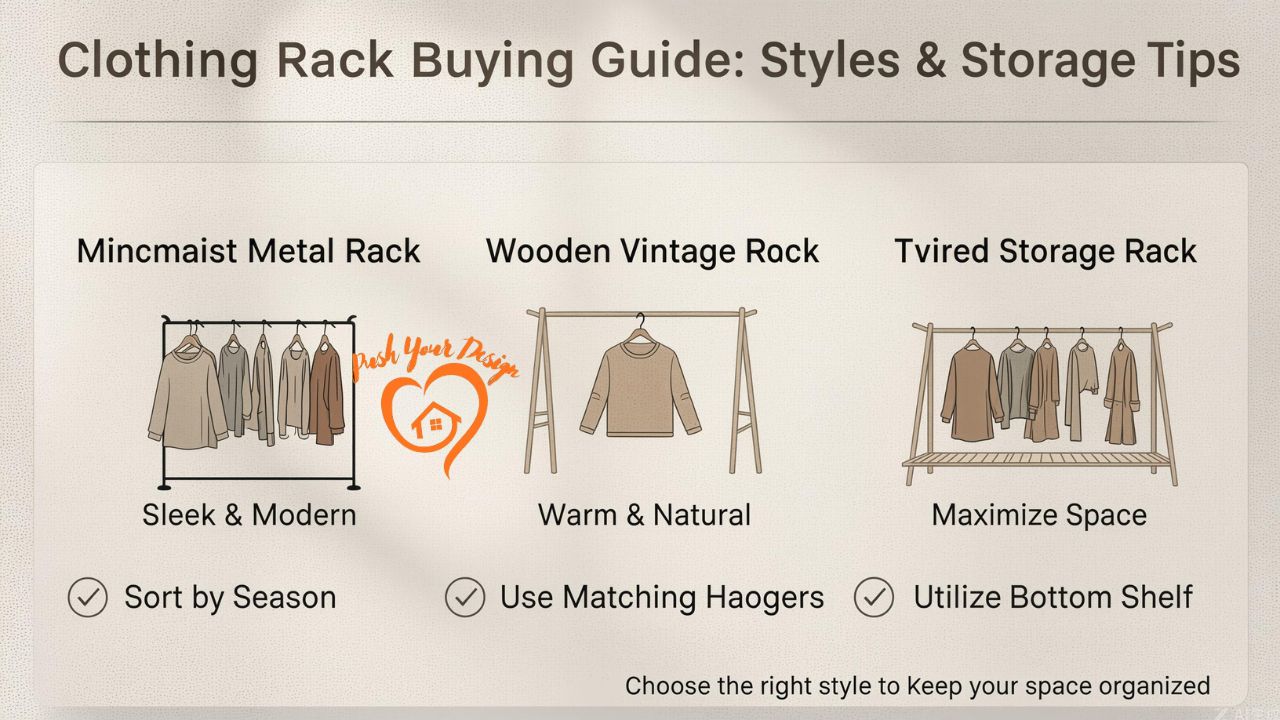
- Metal: Durable, industrial look
- Wood: Warm, natural aesthetic
- Plastic: Lightweight and budget-friendly
- Steel with coating: Rust-resistant and long-lasting
4. Storage Add-ons
Some racks include:
- Shoe shelves
- Drawer compartments
- Hooks for bags and hats
- Adjustable bars
The more versatile it is, the better it adapts to evolving needs.
Styling a Clothing Rack as Part of Your Decor
An open rack isn’t just storage—it becomes part of your visual space. Styling matters.


Here are practical styling tips:
Create a Color Story
Arrange clothes by color gradient:
- Light to dark
- Neutral palette
- Seasonal tones
This makes the rack look intentional rather than cluttered.
Use Matching Hangers
Uniform hangers instantly elevate the appearance. Wooden or slim velvet hangers work beautifully.
Add Texture
Place woven baskets or fabric bins underneath for hidden storage.
Incorporate Decor Elements
Add:
- A small indoor plant
- Framed artwork above
- A floor mirror nearby
This transforms your rack into a design feature.
Clothing Rack for Small Spaces
Living in a compact apartment? Smart placement is everything.
Entryway Solution
Use a slim rack for:
- Jackets
- Bags
- Scarves
It keeps daily essentials accessible.
Bedroom Corner Setup
Place it in an unused corner with a mirror to create a mini dressing area.
Under-Stair Storage
Narrow racks fit perfectly in awkward spaces, maximizing unused square footage.
Studio Apartment Divider
A rack can subtly divide sleeping and living areas while maintaining airflow and light.
Clothing Rack for Retail & Boutique Displays
In retail, presentation influences purchasing decisions. A well-organized clothing rack enhances product visibility.


Display Techniques
- Group items by collection
- Use spacing between garments
- Highlight featured pieces at eye level
Lighting Matters
Soft spotlighting draws attention to premium pieces.
Seasonal Rotation
Easily swap collections without remodeling store fixtures.
Organizing Tips for Long-Term Use
Keeping your rack neat prevents visual overload.
Rotate Seasonally
Store off-season clothes in vacuum-sealed bags.
Avoid Overcrowding
Leave small gaps between hangers to prevent wrinkles.
Use Shelf Dividers
If your rack includes shelving, dividers keep stacks tidy.
Weekly Reset
Spend five minutes each week reorganizing garments.
Maintenance & Care
Even sturdy racks require upkeep.
- Tighten screws monthly
- Wipe metal frames with damp cloth
- Use wood polish for wooden racks
- Avoid moisture buildup
If rust appears, use mild steel cleaner.
Sustainable and Eco-Friendly Options
More consumers are choosing environmentally responsible storage solutions.
Look for:
- FSC-certified wood
- Recycled metal frames
- Low-VOC finishes
- Long-lasting designs that reduce waste
Investing in durable furniture minimizes frequent replacements.
FAQ
Frequently Asked Questions
Is a clothing rack strong enough for heavy winter coats?
Yes, if it’s made of reinforced steel or solid wood with proper weight capacity.
How many clothes can a standard clothing rack hold?
Most standard racks hold 30–50 garments comfortably, depending on spacing.
Can a clothing rack replace a traditional wardrobe?
For minimalists or small spaces, absolutely. It works especially well with capsule wardrobes.
Are rolling racks safe on wooden floors?
Yes, especially if they include rubber-coated wheels.
How do I prevent clothes from gathering dust?
Use garment covers or place the rack in a low-dust area.
Is assembly difficult?
Most racks require simple tools and take 15–30 minutes to assemble.
What is the ideal height for hanging dresses?
At least 55–60 inches of vertical clearance is recommended.
Can I use a clothing rack outdoors?
Only if it’s rust-resistant and placed under cover.
Conclusion
A thoughtfully chosen clothing rack is far more than a temporary fix. It’s a flexible storage solution, a design element, and sometimes even a lifestyle upgrade. From compact apartments to stylish boutiques, it adapts to your needs while keeping garments accessible and organized.
By considering size, material, weight capacity, and styling, you can turn a simple rack into a centerpiece that enhances both function and visual appeal. Whether you’re embracing minimalism, reorganizing your wardrobe, or designing a retail space, the right choice makes all the difference.