Introduction
A well-built garden changes the way a yard feels. It turns an empty corner into a place that produces food, color, and daily satisfaction. Raised garden bed plans are often the first step because they make gardening easier, cleaner, and far more manageable for beginners and experienced growers alike 🌱
Many people start with enthusiasm but quickly realize that random planting creates problems later—poor drainage, wasted space, weak soil, and difficult maintenance. A clear plan prevents that from happening.
Raised beds also solve practical issues that traditional ground planting cannot always handle. They warm up faster in spring, improve drainage, reduce weed pressure, and allow better control over soil quality.
Most importantly, they help you design your garden around how you actually live: how much space you have, what you want to grow, how often you water, and how much effort you want to invest.


Why Raised Garden Bed Plans Matter Before You Build
A raised bed may look simple, but small mistakes in width, depth, and placement create long-term frustration.
The most successful gardens begin with measured decisions. Width affects reach. Depth affects root growth. Orientation affects sunlight. Material affects lifespan.
If a bed is too wide, harvesting becomes uncomfortable. If it is too shallow, root crops struggle. If placed in partial shade, fruiting plants underperform.
Ideal Size for Everyday Gardening
For most home gardens, the most practical dimensions are:
- Width: 3 to 4 feet
- Length: 6 to 8 feet
- Depth: 10 to 18 inches
- Path spacing: at least 2 feet
A four-foot width works because you can reach the center from either side without stepping into the soil.
Choosing the Right Location
Place beds where they receive:
- 6 to 8 hours of sunlight daily
- Easy access to water
- Good airflow
- Distance from tree roots
Morning sunlight is especially valuable because it dries leaves early and reduces disease risk.
Raised Garden Bed Plans for Small Spaces
Not every garden has a large yard. Many productive beds are built in narrow side spaces, rooftops, patios, or small courtyards.
Small-space planning works best when every inch has a purpose.
Narrow Bed Layout for Compact Areas
A narrow design often performs better than square boxes in limited spaces.
Recommended layout:
- Width: 2 feet
- Length: 6 feet
- Height: 12 inches
This shape fits against walls and fences while keeping access simple.
After two growing seasons, many gardeners discover that narrow beds are easier to maintain than oversized ones.


Vertical Support Inside Small Beds
Add trellises for crops such as:
- Tomatoes
- Cucumbers
- Beans
- Peas
Vertical growth saves horizontal space and improves air circulation.
Corner Bed Strategy
Unused corners often become highly productive when shaped into L-design beds.
This creates planting zones without wasting edges.
Materials That Work Best for Long-Term Durability
The material you choose affects maintenance, cost, and lifespan.
Wood Options
Most people prefer wood because it is easy to cut and assemble.
Best choices include:
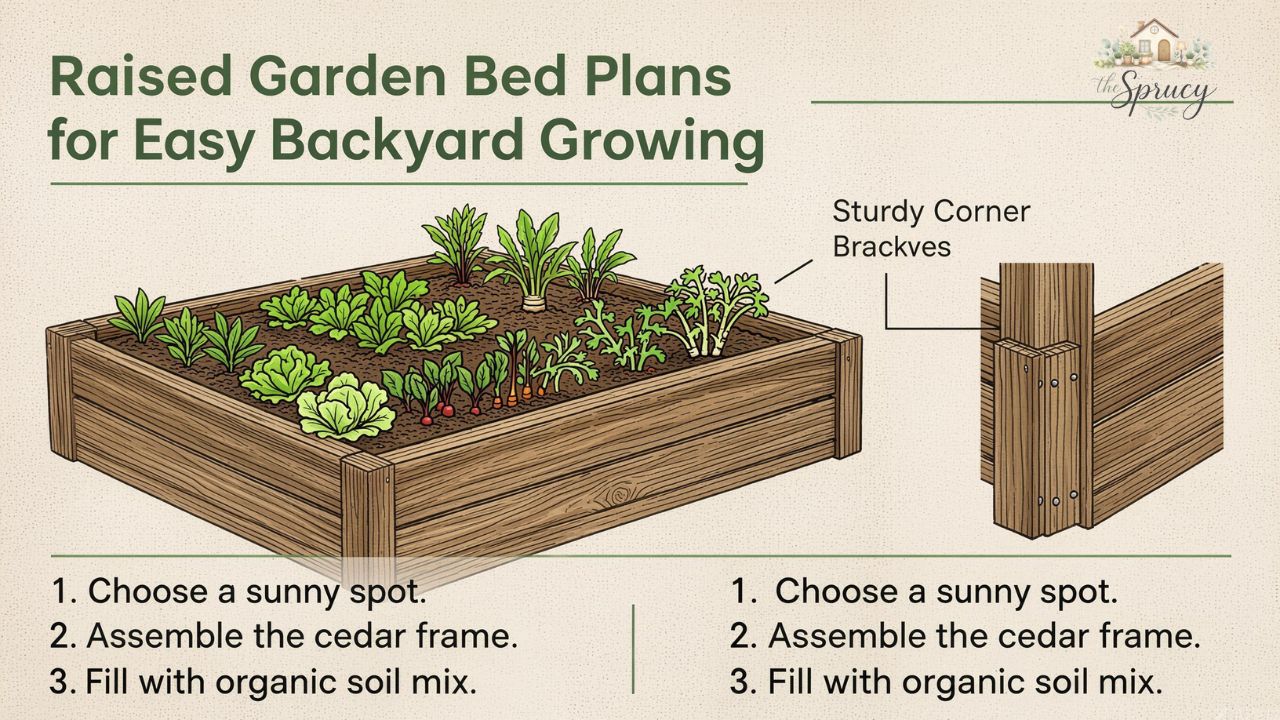
- Cedar
- Redwood
- Untreated pine
Cedar lasts longest because it naturally resists moisture and insects.
Pine costs less but usually requires replacement sooner.
Metal Raised Beds
Metal beds are increasingly popular because they last longer and resist rot.
Benefits include:
- Long lifespan
- Clean appearance
- Strong edge stability
However, metal heats faster in extreme summer climates.
Concrete Blocks and Brick
These materials work well for permanent gardens.
They are ideal if you want beds that remain fixed for years.
Soil Depth and Layering for Strong Plant Growth
A raised bed only performs well when the soil profile matches crop needs.
Recommended Soil Mix
A balanced mix often includes:
- 40% topsoil
- 40% compost
- 20% aeration material such as coarse sand or perlite
This creates drainage while holding nutrients.
Depth by Crop Type
Different plants require different depths:
- Lettuce: 6 inches
- Herbs: 8 inches
- Carrots: 12 inches
- Tomatoes: 18 inches
Deep-rooted crops always reward deeper beds.
Bottom Layer Decisions
In most cases, leave the bottom open to native ground.
This allows roots to expand naturally and improves drainage.


Raised Garden Bed Plans for Vegetables Throughout the Year
A bed should not serve only one season. Good planning means year-round productivity.
Spring Layout
Best early crops:
- Spinach
- Lettuce
- Radish
- Peas
These tolerate cooler temperatures.
Summer Layout
Switch to heat-loving crops:
- Tomatoes
- Peppers
- Basil
- Cucumbers
Tall plants should stay on the north side so they do not shade smaller crops.
Autumn Rotation
After summer harvest:
- Kale
- Beetroot
- Garlic
- Carrots
Rotation keeps soil healthier and lowers pest buildup.
Drainage Rules Most Beginners Ignore
Poor drainage ruins many new beds.
Signs of Drainage Problems
Watch for:
- Standing water after irrigation
- Yellow leaves
- Slow growth
- Soil crusting
Simple Drainage Fixes
Improve drainage by:
- Avoiding compact soil
- Mixing compost well
- Keeping beds slightly elevated
In rainy climates, deeper beds often perform better.
Smart Path Planning Between Beds
A beautiful bed layout fails if movement becomes awkward.
Comfortable Walking Space
Minimum path width:
- 24 inches for walking
- 30 inches if using carts or buckets
Surface Options
Common path materials:
- Gravel
- Wood chips
- Brick
- Grass
Wood chips are often the easiest low-cost solution.
Irrigation Ideas That Save Time
Watering manually works at first, but larger gardens benefit from systems.
Drip Irrigation for Raised Beds
Drip lines reduce evaporation and target roots directly.
Benefits:
- Less water waste
- Fewer fungal issues
- Consistent moisture
Watering Schedule
Most raised beds need:
- Deep watering 2–3 times weekly
- More frequent watering during extreme heat
Morning watering always performs best.
Designing Beds for Easy Maintenance
The best garden is one you can maintain without strain.
Height for Comfortable Gardening
Higher beds help reduce bending.
Comfortable heights:
- 10 inches standard
- 18 inches easier access
- 24 inches ideal for limited mobility
Edge Finishing
Wide edges can act as sitting surfaces during work.
This small detail changes daily comfort significantly.
FAQ
What wood lasts longest for raised garden beds?
Cedar usually lasts the longest because it naturally resists moisture and insects without chemical treatment.
How deep should raised garden beds be for vegetables?
Most vegetables grow well in 12 inches, but root crops and tomatoes perform better in 18 inches.
Do raised beds need a bottom layer?
Usually no solid bottom is needed. Open soil allows roots to expand naturally.
Are metal beds better than wooden beds?
Metal lasts longer, but wood stays cooler and often looks more natural in home gardens.
How many raised beds should a beginner build?
Two beds are usually ideal for beginners because they stay manageable.
Can raised beds be placed on concrete?
Yes, but drainage must be carefully managed and soil depth increased.
How often should soil be replaced?
Complete replacement is rarely needed. Add compost every season instead.
What width is best for easy access?
Four feet is considered the best width for comfortable planting and harvesting.
Conclusion
A productive garden rarely begins with guesswork. It begins with proportion, placement, and practical thinking. Good raised garden bed plans help you avoid wasted effort and create a growing space that keeps working season after season 🌿
The strongest gardens are usually simple: correct width, healthy soil, reliable sunlight, and enough room to move comfortably. Once those basics are right, even a small backyard can become highly productive.
The real advantage is not just cleaner planting—it is confidence. When the structure is right, every planting season becomes easier, faster, and more rewarding 🌼